How do you actually make money trading meme coins without becoming exit liquidity?
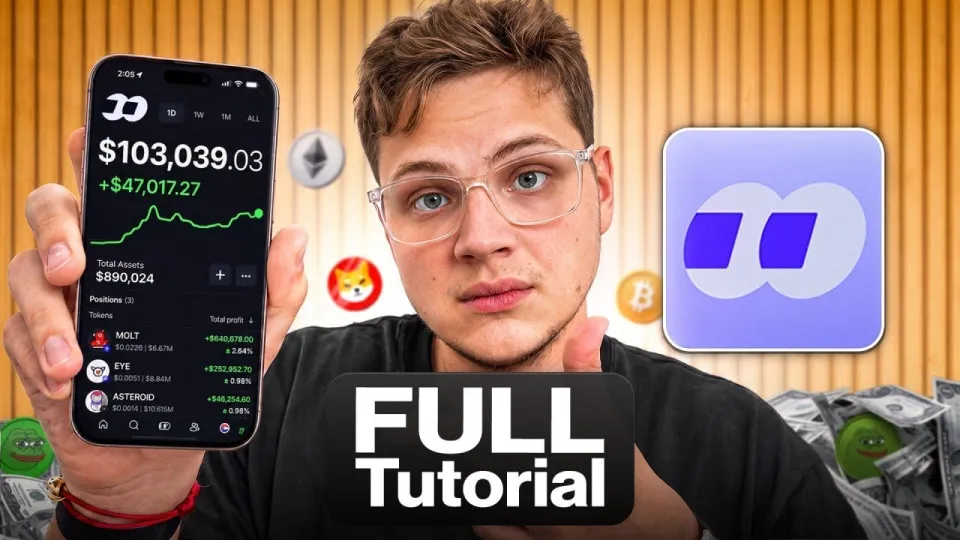
Video: How To Make Money Trading Memecoins (fomo app tutorial)
Want articles like this for your own video to promote it on YouTube and Google? Order them through the Telegram bot @sat_sit_bot. It writes articles around your video, embeds the video and publishes them on popular niche websites (no ads). Free trial — 50 articles.
Meme coin trading makes money when you buy a narrative early, size the bet so a total loss is survivable, and sell into the liquidity that later buyers create. It is a distribution game, not an investing game: the profit comes from someone paying more than you did, and the exit is the hard part. Tools like the Fomo trading app compress discovery, buying and selling into one interface, which removes friction but not risk.
What a meme coin actually is and where the money comes from
A meme coin is a token with no cash flow, no product and no claim on anything — its price is purely a function of attention and liquidity. That single fact explains both the upside and the failure mode: when attention arrives, price moves fast; when it leaves, the order book is empty and the last buyers absorb the loss. On Solana, most of these tokens launch through a launchpad, get a bonding curve, and either graduate to a real pool or die quietly within hours.
Profit therefore has three sources, and only three:
- Being earlier than the crowd on a narrative that later gets attention.
- Providing liquidity or trading volatility rather than holding direction.
- Selling to buyers who arrive after you — which requires those buyers to exist.
Everything else is storytelling. A token with a funny ticker and a Telegram full of emojis has the same economics as a token with a serious whitepaper if neither has revenue: the only question is who is on the other side of your sell order.
How the Fomo app fits into a meme coin workflow
The Fomo app is a trading front-end that puts meme coin discovery, charting and execution in one place, and the creator of the Orangie Web3 channel walks through it as a beginner-friendly alternative to juggling a wallet, a launchpad and a charting site. The referral entry point is https://fomo.family/r/orangie, which is where new users sign up before funding a wallet.
A typical session in such an app looks like this:
- Scan trending or newly launched tokens and check age, holder count and liquidity.
- Open the chart, mark the level where you would be wrong, and decide position size before clicking buy.
- Execute the buy, then immediately set a sell plan — partial at the first target, remainder trailed.
- Track the position; if liquidity thins or holders concentrate, exit rather than average down.
The app removes steps, but it does not remove the two things that decide the outcome: how much you risk per trade and whether you have an exit rule before entry. A fast interface makes bad habits faster too.
Why copy trading meme coins usually means buying the top
Copy trading fails on meme coins because the wallet you are copying is not obligated to tell you what it did before the trade you can see. A common pattern is that a large trader buys on a separate account first, then buys on the main wallet that followers watch — the visible buy is the marketing, and the earlier buy is the position being sold into the copy-trade demand.
Even without deliberate manipulation, latency kills the edge. By the time a trade is public, the price has already moved, the slippage is higher, and the exit liquidity is thinner. Copy trading can work in liquid markets where edges persist for minutes; on a token with a few hundred thousand dollars of liquidity, the edge lasts seconds.
What to do instead:
- Use large wallets as a signal of attention, not as an entry trigger.
- Check whether the token still has room before the next obvious resistance or the next big holder's cost basis.
- Track your own hit rate and average win/loss; a strategy you cannot measure is a hobby.
Position sizing and risk rules that keep meme coin traders alive
Survival in meme coins is a sizing problem before it is a picking problem. If a single position can wipe out the account, no amount of chart skill matters, because the distribution of outcomes includes a large probability of zero. A workable framework for a small account is to risk 1–5% of the trading wallet per position and to treat that amount as already lost at entry.
Practical rules that experienced traders converge on:
- Keep the trading wallet separate from savings; fund it with money you can lose entirely.
- Cap the number of open positions so you can actually monitor each one.
- Take partial profit at the first meaningful move instead of waiting for a round number.
- Never add to a losing meme coin position; there is no fundamental value to average into.
- Assume every link, token approval and "free mint" is a potential wallet drainer.
One viewer of the tutorial described getting drained, reloading with about $90, making roughly $30 one day and giving it back the next — that is the normal shape of a beginner's equity curve, and it is survivable only because the size was small.
Reading liquidity, holders and narrative before you buy
Liquidity and holder distribution tell you whether an exit exists, which matters more than any chart pattern. A token with thin liquidity can show a beautiful green candle and still be impossible to sell at scale; a token where a handful of wallets hold most of the supply can be repriced downward in one transaction.
Checklist before any entry:
- Liquidity relative to your position size — can you exit without moving price more than a few percent?
- Holder concentration — what share sits in the top 10 wallets, and are they locked or fresh?
- Contract and socials — is the token a clone of an existing ticker, and do the links resolve to real accounts?
- Narrative timing — is the meme still spreading, or is it already being recycled by accounts that post every launch?
- Age — a token that survived several hours has a different risk profile from one that is four minutes old.
Narrative is the part that cannot be measured, and it is also where most of the return comes from. The traders who do well are usually early to a format — a character, an animal, a phrase — and exit while it is still being repeated by people who are not traders.
Common questions from new meme coin traders
New traders ask the same handful of things: how much to start with, whether to follow big wallets, why a token they bought cannot be sold, and whether the whole thing is a scam. Each has a concrete answer rather than a philosophical one.
On starting capital: an amount small enough that a total loss does not change your month. On following big wallets: treat it as a watchlist, not an instruction. On being unable to sell: check liquidity and whether the token has a transfer restriction before you buy, not after. On scams: assume the base rate of bad launches is high and let the checklist filter them, rather than trying to spot the honest ones by feel. Price alerts are the most requested feature among users of apps like Fomo, and setting your own exit levels manually is the workaround until alerts exist.
Useful links
- Fomo trading app and registration: https://fomo.family/r/orangie
- Community Discord for meme coin discussion: https://discord.gg/memecoins
- Channel updates on Instagram: https://www.instagram.com/orangieyt/
The bottom line on meme coin trading
Meme coin trading can be profitable, but the edge is process rather than prediction: small size, fast exits, and a hard rule against averaging down. The Fomo walkthrough published by Orangie Web3 is useful mainly because it shows the mechanical side — discovery, execution, selling — in one place, which lets a beginner focus on the decisions that actually determine results. Start with money you can lose, paper-trade the checklist until it is automatic, and judge yourself on risk management rather than on the one trade that went up 20x. If you want to test the workflow described here, you can register through the Fomo referral link and start with a minimal balance.
Key takeaways
- Meme coin profits come from being early on a narrative and exiting into liquidity, not from holding a chart forever.
- Fomo (fomo.family) is a trading app and referral platform that bundles Solana meme coin discovery, buying and selling in one interface.
- Copy trading is the most common trap: large wallets often pre-buy on a side account before their main-wallet buy is visible.
- A realistic risk unit is 1–5% of a trading wallet per position, because most launches go to zero.
- Price alerts and pre-set exit levels matter more than entry speed once a position is open.
Source: How To Make Money Trading Memecoins (fomo app tutorial) · Markdown version
Questions & answers
How much money do I need to start trading meme coins?
You can start with a very small balance, but the amount matters less than the proportion of your savings it represents. A common approach is to fund a separate trading wallet with money whose total loss would not affect your finances, then risk 1–5% of that wallet per position.
Is copy trading meme coins a good strategy?
Usually not, because the trade you can see is often not the trader's first trade. Large wallets frequently buy on a side account before the visible buy on their main wallet, so followers end up providing the exit liquidity. Treat big wallets as a signal of attention rather than an entry trigger.
Why can't I sell a meme coin I just bought?
The most common reasons are thin liquidity, a transfer restriction in the contract, or a price that has already collapsed below your position's size. Check liquidity depth and holder concentration before buying, since after entry your options are limited.
Is the Fomo app safe to use for meme coin trading?
Fomo is a trading interface that streamlines discovery and execution, but it does not remove market risk or smart-contract risk. Use a dedicated wallet, verify links before connecting, and never approve token permissions you do not understand.